

If you are learning French, you have probably already heard someone say: “Careful, that’s France French… we don’t really say it like that in Quebec.”
What’s really going on with Quebec French vs France French? Is one “better” or more “correct”? And, most importantly for learners, what actually sets them apart?
A Bit of History: Why Quebec French Sounds Different
To understand French in Montreal and across Canada today, you have to go back a few centuries.
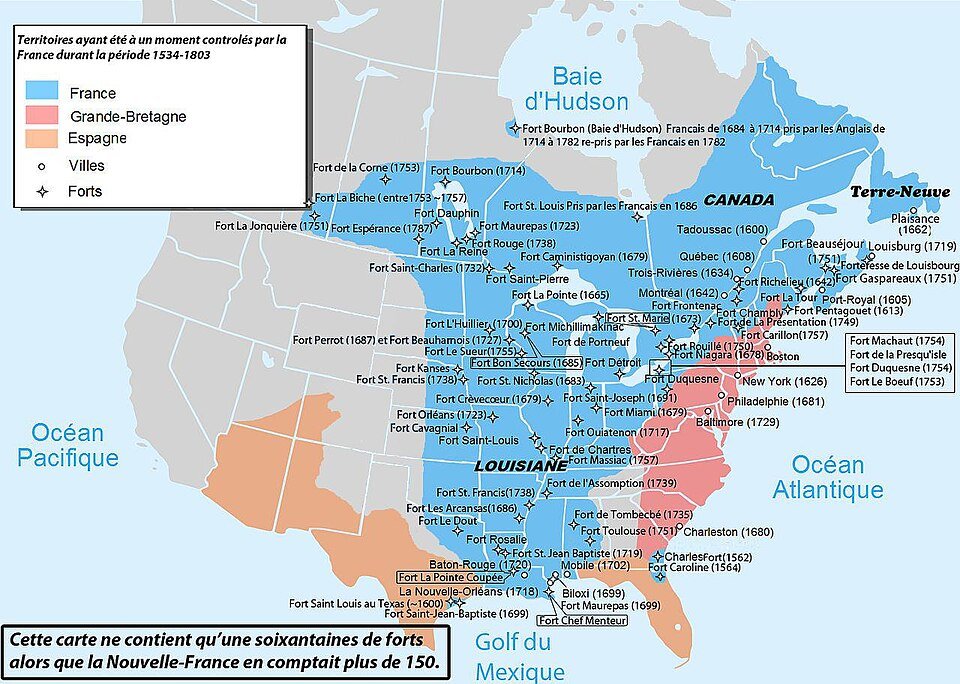
- In the 17th and 18th centuries, settlers from France came to New France, a vast territory that stretched from northern Quebec all the way down to Louisiana.
- They brought the French of their time: regional accents, vocabulary from Normandy, Brittany, Paris, and the West of France.
- Then, after the British conquest (1760), Quebec was cut off from France in many ways for a long time.
Meanwhile, French in France kept evolving:
- New Parisian fashions,
- New slang,
- Influence from modern media and immigration,
- Major pronunciation shifts in the 19th and 20th centuries.
In Quebec, French also evolved, but differently:
- It kept some older words and pronunciations that disappeared in France.
- It added its own influences: English, Indigenous languages, local culture.
When you learn Quebec French in Montreal, you are not learning “bad French” or “broken French”. You are learning a legitimate, historically rich variety of the language with its own rules.
Vocabulary: Same Language, Different Everyday Words
French speakers from Quebec and France understand each other, but they will quickly notice vocabulary differences. Here are some classic examples:
- car
- France: voiture
- Quebec: char
- boyfriend / girlfriend
- France: petit ami / petite amie
- Quebec: chum / blonde
These differences exist because language naturally evolves alongside local culture, daily life, and contact with other languages such as English. Quebec French also preserved certain expressions and pronunciations from older forms of French that disappeared elsewhere over time. If you are curious to hear what historical French and vocabulary sound like, channels like Les Persifleurs du Grand Siècle are excellent resources. Understanding these older forms makes it much easier to appreciate how Quebec French both preserved parts of its linguistic heritage and developed its own unique modern identity.
The Meal Confusion
Now for the famous mealtime puzzle.
In France today, the standard terms are:
- petit-déjeuner = breakfast (morning)
- déjeuner = lunch (midday)
- dîner = dinner (evening meal)
In Quebec, you will hear:
- déjeuner = breakfast (morning)
- dîner = lunch (midday)
- souper = supper (evening meal)
Why the difference?
Historical Reason
Originally, in older French (and even in some regions of France historically):
- déjeuner literally meant “to break the fast” (the first proper meal of the day).
- dîner was originally the main meal of the day, a word that goes back to the Latin expression cena diei, meaning “the day’s meal.”
- souper was originally a lighter evening meal, often built around a simple soup.
As time went on in France:
- The daily schedule shifted with urban life and work hours.
- The main meal moved to the evening.
- The names shifted too:
- a new word, petit-déjeuner, appeared for breakfast.
- déjeuner became the midday meal.
- dîner moved to the evening meal.
In Quebec, the older system stayed:
- déjeuner = morning meal.
- dîner = midday meal.
- souper = evening meal.
Quebecers are actually preserving older, historically consistent meal terms, while France gradually updated the labels as daily routines changed. It is a clear example of how history shapes the modern differences between Quebec and France French. And if you are learning French in Montreal or looking for work in Quebec, it is important to learn the Quebec system, because that is the one people around you really use.
Pronunciation: The Music of Quebec French
One of the first things learners notice in Quebec French vs France French is the sound. In Quebec, some vowel sounds are held a bit longer or dip slightly from one sound to another (a small “glide”), especially in casual speech:
- pâte (dough)
- France: “paat”
- Quebec: “pa-outte”
- même (same)
- France: “mem”
- Quebec: can sound like “mayme”
To a learner, it can sound “sung” or more musical. That is part of the charm of Quebec pronunciation.
Expressions: Colorful Quebec French
Quebec French is famous for its colorful expressions. A few examples that often surprise learners:
- “Je suis tanné.”
- Literal: “I am tanned” (nope!)
- Meaning: I’m fed up / I’ve had enough.
- “C’est plate.”
- France: plat(e) means “flat”
- Quebec: “That’s boring / What a shame !”
- “Ça a pas d’allure.”
- Meaning: “That makes no sense” or “That’s ridiculous.”
These Quebec French expressions are part of everyday life in Montreal. Learning them makes you sound more natural and helps you understand what people really mean, not just what they literally say.
Reassurance for Learners: Which French Should You Learn?
If you are studying with Montreal French Tutor, living in Quebec or seeking employment in Quebec, the answer is simple: learn Quebec French first, with solid grammar that works everywhere.
A few reassuring points:
- No variety is “incorrect”.
Quebec French and France French are like British and American English: different words, slightly different pronunciation, same language. - Your ear will adapt.
If you listen to content from Quebec and France (for example, websites like Je parle Québécois or movies in France French), you will quickly get used to both. - Local expressions are a bonus, not a barrier.
Focus first on clear communication. Then, gradually add Quebec French expressions like « je suis tanné », « c’est plate », « ça a pas d’allure » to sound more natural.
- You will be understood in France.
Standard grammar is shared. Once you are comfortable with one accent, it is much easier to adapt to another.

Final Thoughts: Embrace the Variety
When you look at Quebec French vs France French, remember:
- The differences come from history, not from one side “making mistakes”.
- Pronunciation, vocabulary, and meal names in Quebec tell a story about how French crossed the ocean and evolved in a new world.
If you are learning French with Montreal French Tutor, you have a fantastic opportunity: you can build a solid base in French, you can fine-tune your ear, play with expressions, and fully enjoy the richness of the language on both sides of the Atlantic.
Ready to improve your French with confidence?
Personalized online French lessons for motivated adults in Montreal and across Canada.